Orchestration Over Delivery: Why It Matters in Architecture & Development
February 16, 2026
The Urbanscapes of Basant: The Cultural & Spatial Heritage of Lahore
February 16, 2026How AI is transforming architectural development from drawing slower to thinking faster.
The Speed of Design Has Changed
In today’s architectural landscape, time has become the new material. The profession no longer measures value in the number of lines drawn but in the velocity of ideas translated into intelligence.
If the 20th century belonged to those who drafted well, the 21st belongs to those who think fast and think deeply.
AI: The Flash That Thinks
AI-powered tools like Midjourney, DALL·E, Spacemaker, and Revit AI extensions have become the superhero sidekicks that architects didn’t know they needed. They’re fast, precise, and astonishingly insightful, capable of analyzing spatial relationships, climate data, and building codes in seconds.
While one is struggling to produce a render, AI has already generated ten design options, each one tested for sunlight, energy performance, and structural logic.
But AI isn’t just fast. It’s reflective. It learns from iteration, recognizes design logic, and gives you the kind of contextual awareness that transforms drafting into dialogue.
The Flintstone Trap: Drawing Without Thinking
We view AI not as automation but as amplification. It extends the architect’s reach into realms once inaccessible, real-time energy modeling, spatial optimization, contextual intelligence, and returns feedback at the speed of thought.
The result is not the loss of craft, but the rebirth of authorship: architecture as a dialogue between human intuition and machine intelligence.
Super Speed in Design Iterations
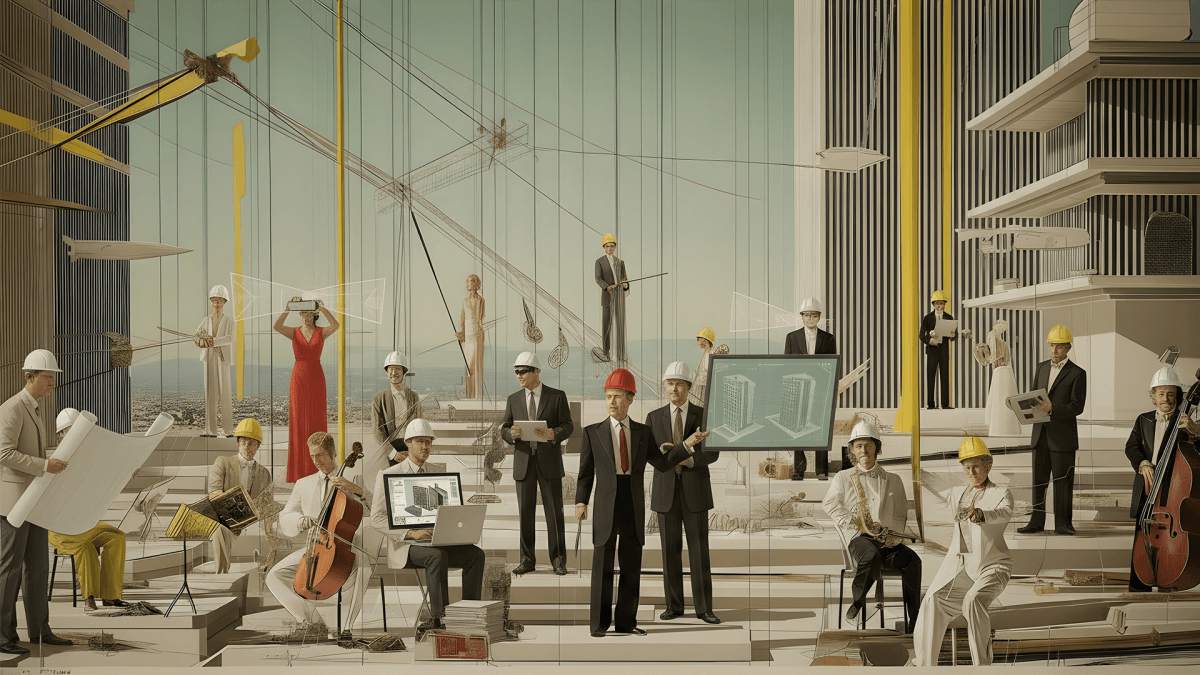
True innovation lies in orchestration. The architect’s role evolves from maker to composer, weaving data, empathy, and aesthetics into coherent systems of meaning.
AI becomes the instrument through which human imagination scales; it doesn’t replace the mind, it reflects it.
From Drafting to Dialogue: How to Begin
Every architect and designer can begin integrating AI into their workflow today:
- Image Generators (Midjourney, DALL·E): for fast conceptual visualizations.
- AI in BIM Tools (Revit, Archicad): for structural efficiency and material optimization.
- Urban Planning Tools (Spacemaker): for site analysis, sunlight simulation, and regulatory fit.
- ChatGPT: for generating reports, design narratives, or code explanations.
The trick is not to let the tool think for you, but to let it think with you.
The Buildcscape Perspective: Designing at the Speed of Thought
At Buildscape, we believe the future of architecture is no longer about drawing better, it’s about thinking smarter. AI is not replacing the architect; it’s redefining what it means to be one.
For us, this is the essence of architectural diplomacy: bridging human and digital intelligence to produce spaces that think, adapt, and inspire.
The question is no longer whether AI will change architecture, but how architects will change through AI.
So, the next time you sketch, ask not how fast you can draw, but rather how deeply you can think.